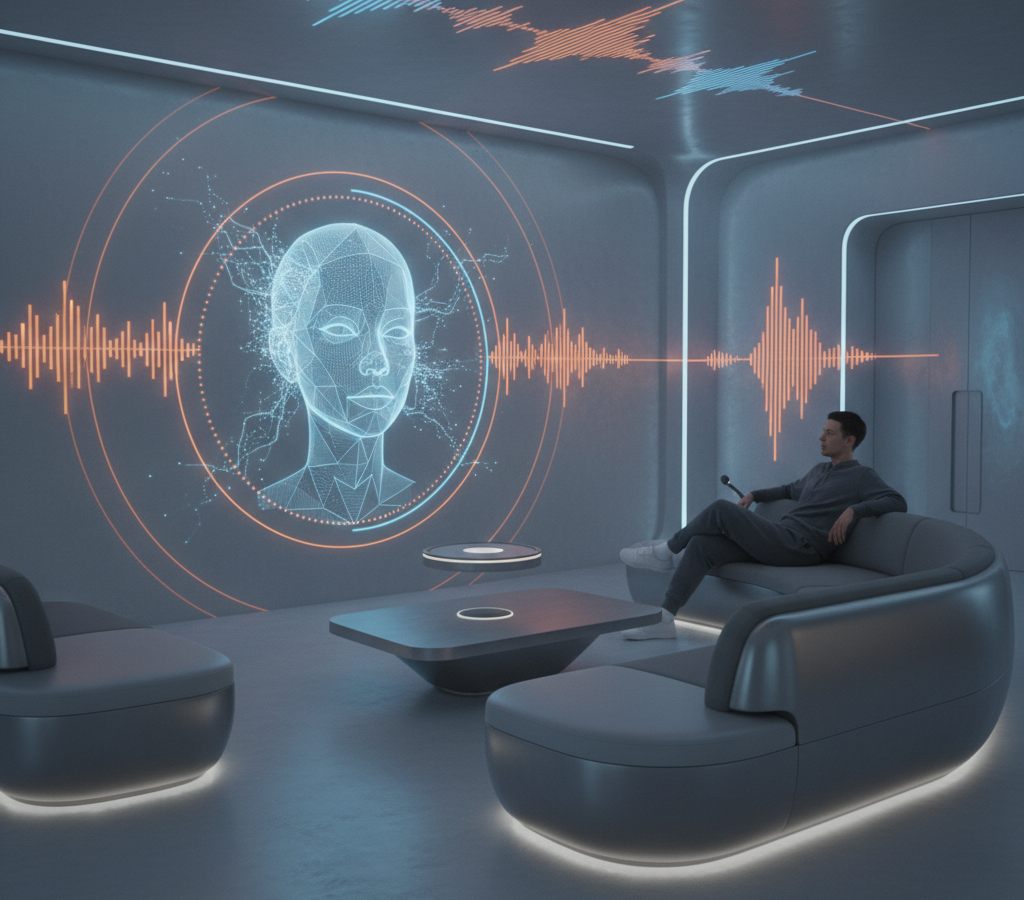

We’ve all been told that the screen is the future. Phones, laptops, smart displays – the glossy narrative that everything will eventually live on a 2D plane. OpenAI’s recent pivot to an all‑audio ecosystem turns that mantra on its head, and the implications reverberate beyond the tech press.
The Hook
OpenAI is betting billions that the next interface will be voice‑driven, not screen‑driven. While the company touts this as a move toward “natural” human‑machine interaction, the underlying strategy is a calculated retreat from visual dominance. Screens have become a commodity; sound is the new frontier.
The Meat
OpenAI announced a suite of audio‑centric products, from a whisper‑mode chatbot that can embed itself in HVAC systems to a conversational AI that powers in‑car dashboards and even smart prosthetics. The company’s architecture is built on Whisper for speech recognition and DALL‑E for generating audio prompts that guide human intent. The promise: a hands‑free, eyes‑free experience that fits seamlessly into everyday life.
Yet the move raises several hard questions. First, accessibility: the visual display provides a safety net for those with hearing impairments, color blindness, or low literacy. Will an audio‑first paradigm make technology less inclusive? Second, privacy: every utterance is a data point. While privacy safeguards are touted, the sheer volume of audio data being harvested could fuel new regulatory scrutiny.
From a competitive standpoint, Apple’s AirPods, Amazon’s Echo, and Google’s Home are already entrenched in the audio space. OpenAI’s entry is a strategic attempt to capture the “interface‑as‑a‑service” market that Google’s “Google Assistant” has only partially monetized. In effect, OpenAI is betting that the future will be a mesh of silent, embedded AIs that respond to a single spoken request, thereby consolidating the market around its proprietary models.
The Analysis
In the grand scheme, this pivot underscores a broader Silicon Valley trend: commoditizing the device and commodifying the experience. If you strip a smartphone down to its core function, it becomes a processor with a touchscreen. OpenAI’s vision strips the processor to its core voice‑processing logic, letting the interface be invisible. That shift is both elegant and terrifying.
Historically, transitions from one medium to another are marked by a “lock‑in” period where consumers still demand the old. Think of how the first iPhone users still swiped their way through a paper‑like interface. OpenAI’s challenge is two‑fold: deliver a compelling audio experience that feels natural enough to replace a screen and convince manufacturers to embed proprietary audio frameworks into their hardware. The latter is a hard sell; OEMs will weigh the cost of integration against the promise of differentiation.
For the masses, this could mean a quieter, more streamlined interaction with devices. Picture a kitchen where you never have to touch a stove, a car that hands over navigation purely via voice, or a medical implant that alerts a patient with a soft hum instead of a blinking light. The future is intimate. But intimacy can also become intrusive. The idea of a pervasive audio AI listening to every whispered command is a double‑edged sword.
The Kicker
OpenAI’s audacious bet may either ignite a new era of seamless, sound‑driven interfaces or trigger a backlash that forces a return to visual cues. Either way, the company’s move is a clarion call to the industry: we’re no longer in the age of screens; we’re in the age of sound. How we respond will determine who wins the interface war.